Selling silver coins and sterling in Cincinnati
Rolls and jars of pre-1965 silver, 40 percent Kennedy halves, sterling flatware and tea sets. Weighed, priced on the live market and written down.
Silver in Cincinnati houses
Formal dining sets were part of Cincinnati life for generations, and sterling flatware for eight or twelve is common in estates from Hyde Park, Wyoming and Fort Mitchell. It often sits in a felt-lined chest that has not been opened in years.
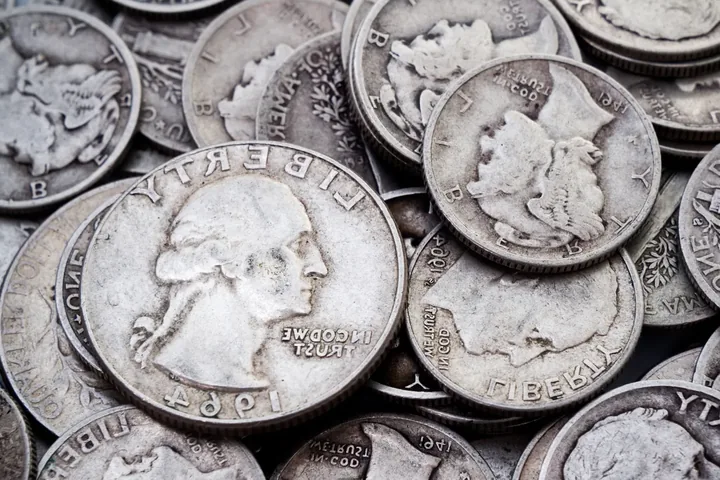
Silver coins turn up just as often, in coffee cans, cigar boxes and rolls from the bank. We weigh it all and look through the coins for better dates before pricing them as silver.
Silver content by coin type
Knowing which coins are silver saves a lot of guessing. Here is the short version for U.S. coins.
- Dimes, quarters and halves dated 1964 and earlier: 90 percent silver
- Kennedy halves dated 1965 to 1970: 40 percent silver
- Jefferson nickels from mid-1942 to 1945 with a large mint mark over Monticello: 35 percent silver
- Morgan and Peace dollars: 90 percent silver
- Eisenhower dollars: mostly copper-nickel, with some 40 percent silver collector versions
Sterling marks to look for
American sterling is usually stamped Sterling or 925. English silver carries a lion hallmark. Continental European silver is often marked 800 or 835, which means slightly less silver than sterling. Pieces marked EPNS, EP or Silver Plate are plated and hold very little metal.
If you are not sure what you have, bring it. We test anything unclear before pricing it.
Weighted and hollow pieces
Candlesticks, compotes and some trays are weighted with pitch or plaster under a thin silver shell. Hollow-handle knives have stainless blades and cement inside. We price only the silver in those pieces, and we explain how we estimate it so the number makes sense.
Before pricing coins as silver
We always look through silver coins for better dates first. Barber coins in good condition, early Mercury dimes and some Standing Liberty quarters are worth more to collectors than their silver. Anything like that gets priced on its own line.
Silver flatware patterns
Most sterling flatware sells by weight. A few patterns from makers like Gorham, Reed and Barton, Towle and Wallace are popular enough that a matching buyer might pay more for a full set. If we think your set is one of those, we say so before pricing it as silver.
Monogrammed pieces sell by weight just like plain ones. Monograms rarely matter to a silver buyer.
What a silver appointment looks like
We separate coins from flatware and jewelry, check every stamp and test anything unclear. Each group goes on the scale. We pull the live silver price, do the math in front of you and write the offer down. Accepted offers are paid that day, in cash or by wire for larger amounts.
Silver we buy
- Dimes, quarters and halves from 1964 and earlier
- Kennedy halves from 1965 to 1970
- War nickels from 1942 to 1945
- Sterling flatware and serving pieces
- Sterling tea and coffee services
- Silver jewelry stamped 925 or Sterling
- Old German and European silver coins
How silver is priced
Silver coins are priced on their silver content. One dollar in face value of 90 percent U.S. silver holds about 0.715 troy ounces of pure silver. Each 40 percent Kennedy half from 1965 to 1970 carries roughly 0.148 ounces of silver.
Sterling is 92.5 percent silver and sells by weight after we take out stainless knife blades and other parts that are not silver. We explain the estimate on weighted pieces.
Further reading: How coin buyers figure an offer
Common questions
- Is silver-plated flatware worth anything?
- Very little. Plated pieces have a thin coat of silver. Anything doubtful gets tested, and you hear the result before we price it.
- Do you buy 40 percent halves?
- Yes. Kennedy halves dated 1965 through 1970 are 40 percent silver.
- Do you buy rolls of silver?
- Yes. We weigh the silver and check each roll for better dates.