Short answer: A fair coin offer starts with the metal in the coin, adds any collector premium the date and grade earn, and keeps a margin that the buyer should be willing to show you. For most common coins, the metal is nearly the whole price.
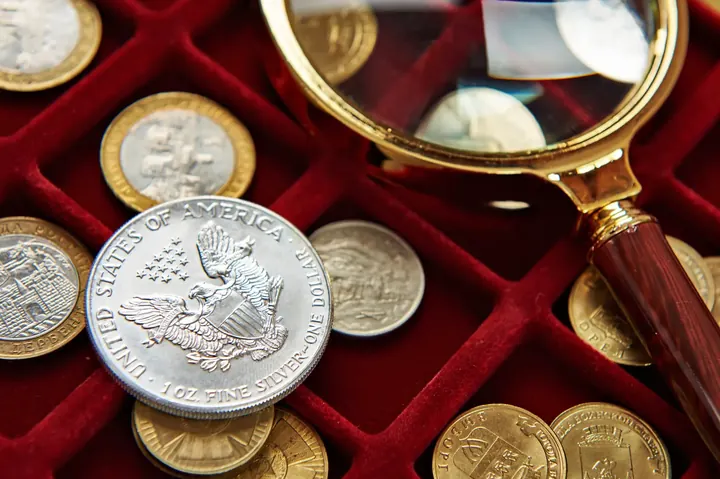
Start with the metal
Every gold and silver coin has a melt value: the pure metal it contains times the spot price that day. A pre-1965 silver quarter holds about 0.18 troy ounces of silver. A one ounce Gold Eagle holds one troy ounce of gold.
Copper and nickel coins have almost no melt value worth talking about, so their floor is face value.
Then the collector premium
Some coins are worth more to collectors than their metal. Scarce dates, low mintages, branch mint marks and high grades all add value. A common worn Morgan dollar sells a little over its silver. A sharp Carson City Morgan can sell for many times that.
- Date and mint mark
- Grade, from heavily worn to uncirculated
- Eye appeal and original surfaces
- Current collector demand
The buyer's margin
Every buyer keeps a margin. That is how the business works. What matters is whether the buyer will show you the spot price, the metal content and the percentage they pay. If a buyer will not explain the number, ask why.
What a written offer should show
A good offer lists each coin or group, its weight or grade, the spot price used and the amount offered. With that, you can compare buyers on equal terms instead of guessing.
More questions
- Why do offers differ between buyers?
- Buyers keep different margins and sometimes grade coins differently. A written, itemized offer makes the difference easy to see.
- Do you pay over spot?
- For bullion, offers are a share of spot. For collector coins, offers can be well above melt when the grade and date earn it.
Thinking of selling? Read about free appraisals, or send the form below.
Get a free offer